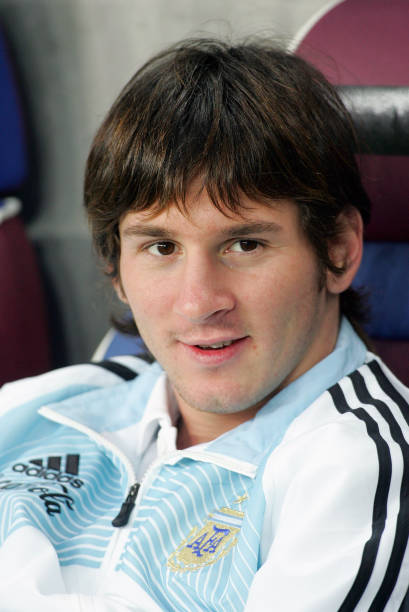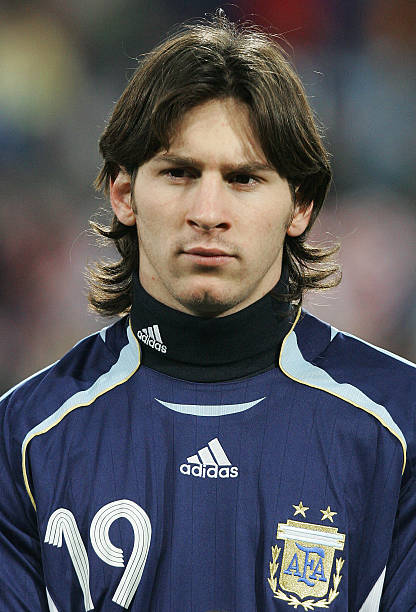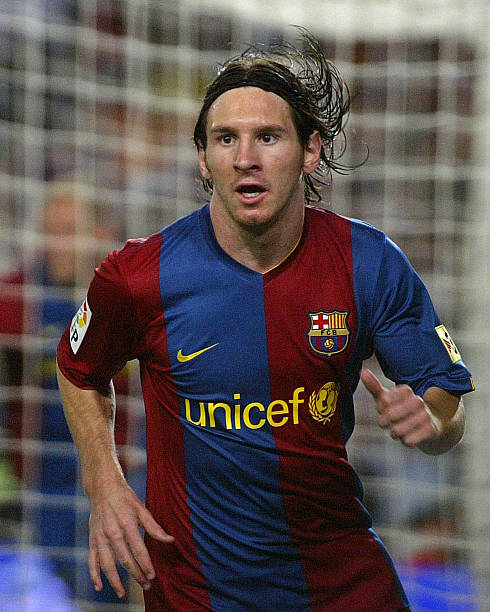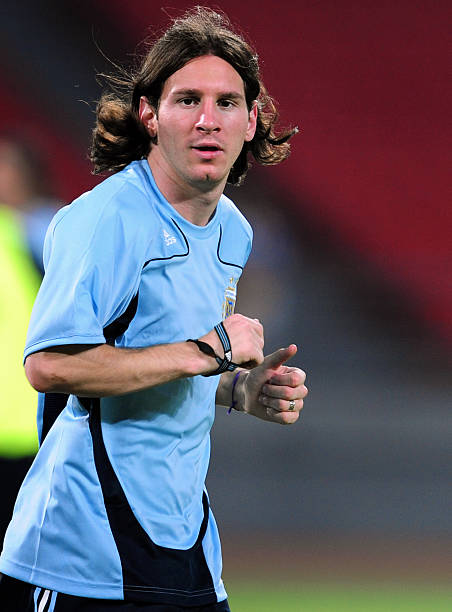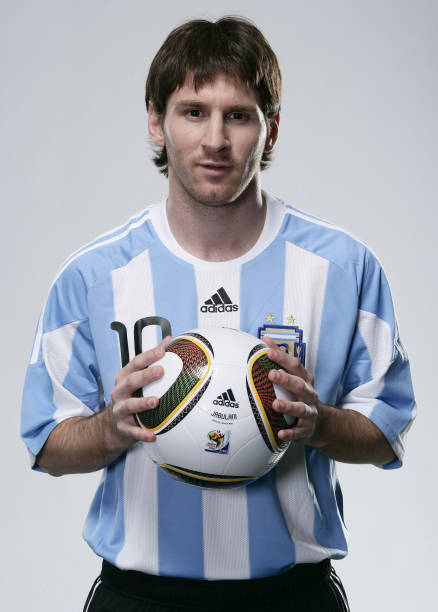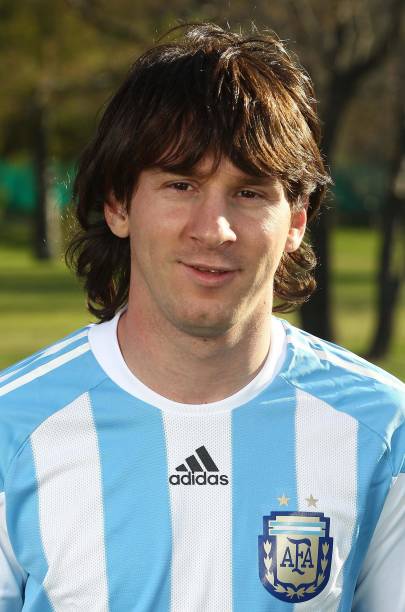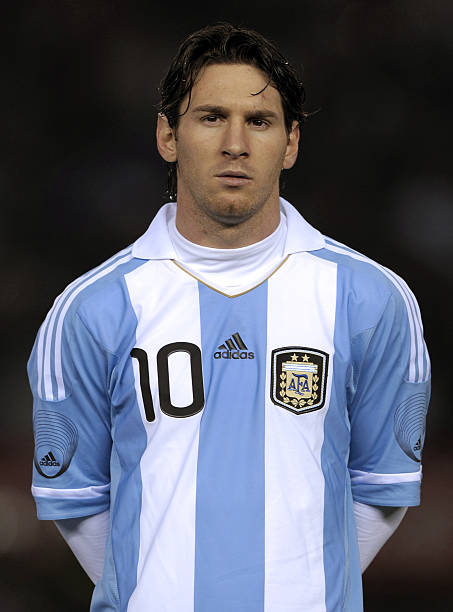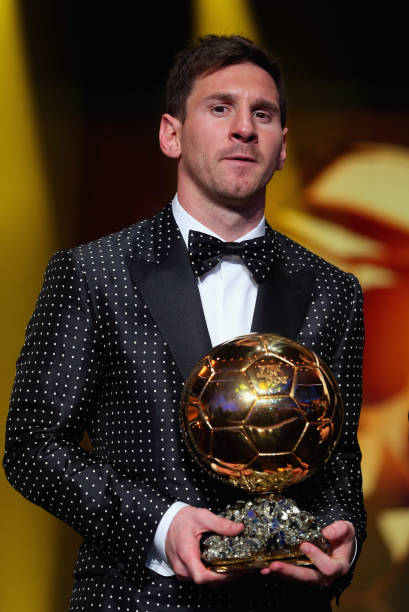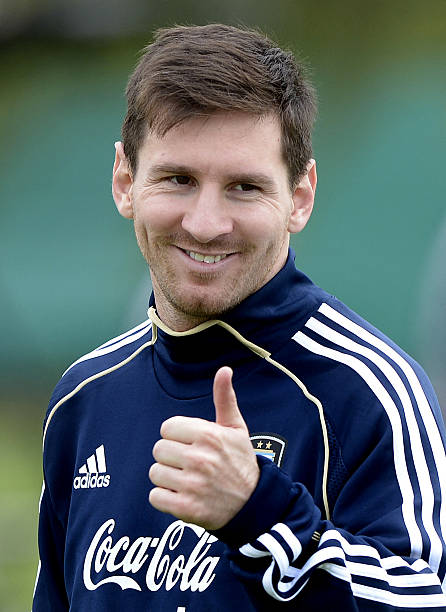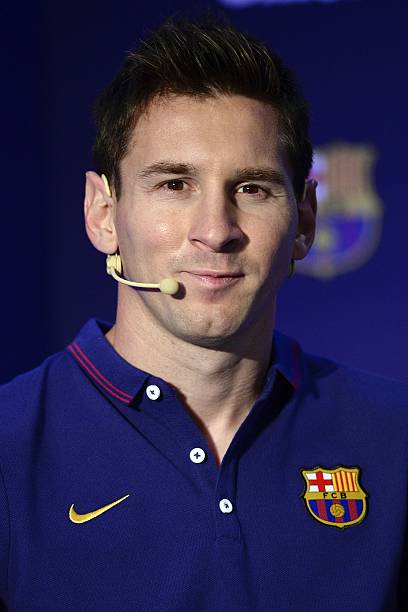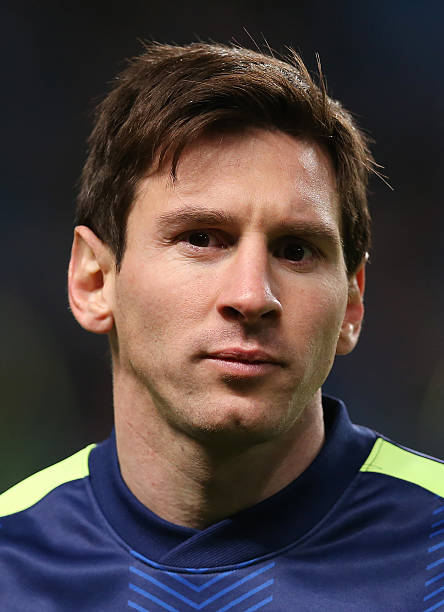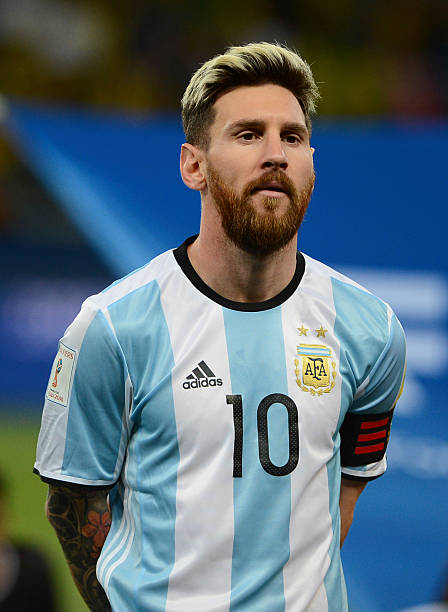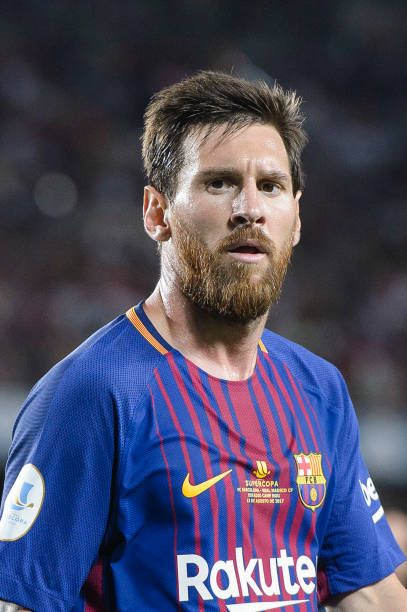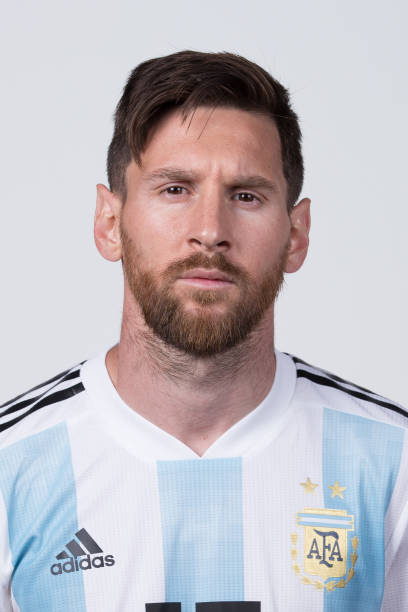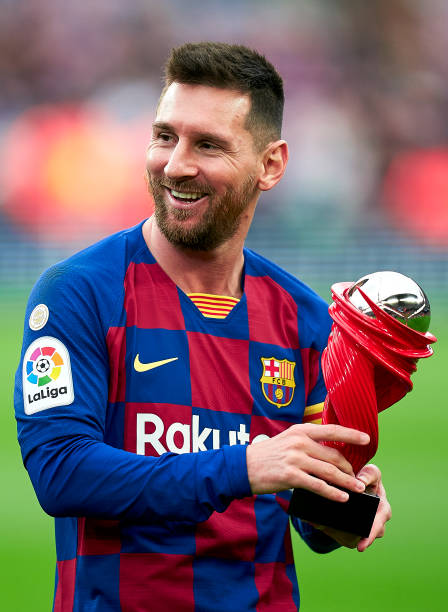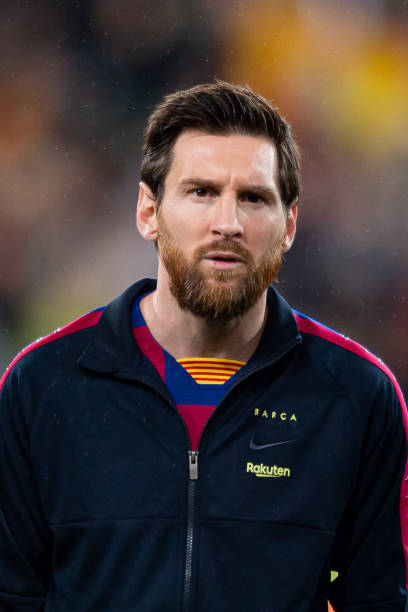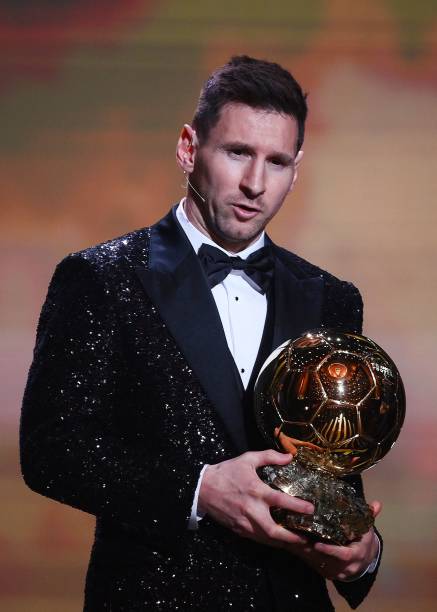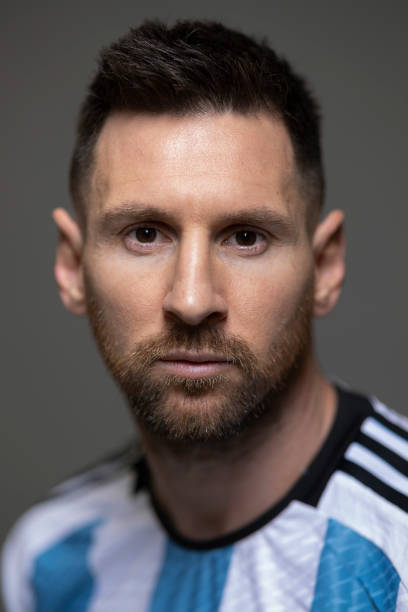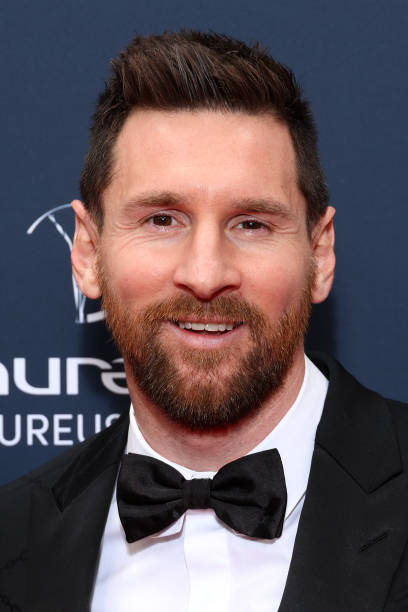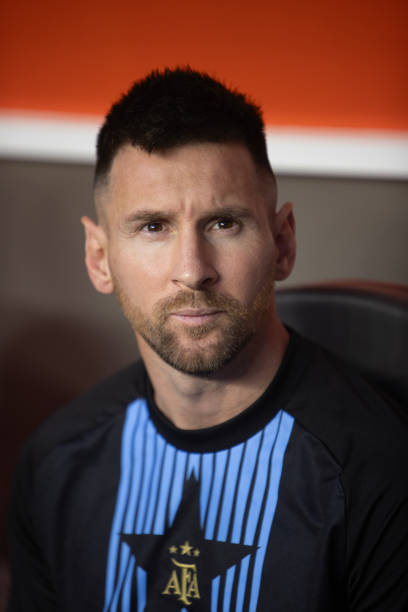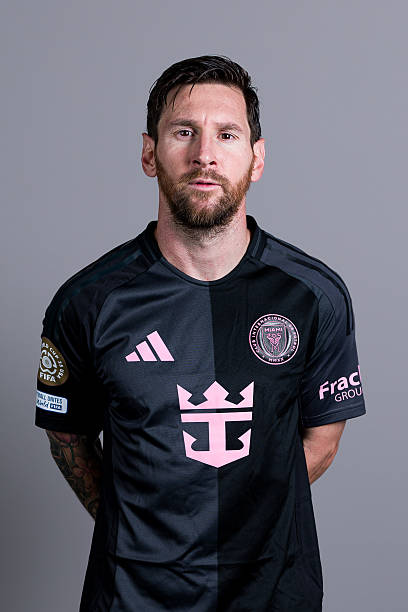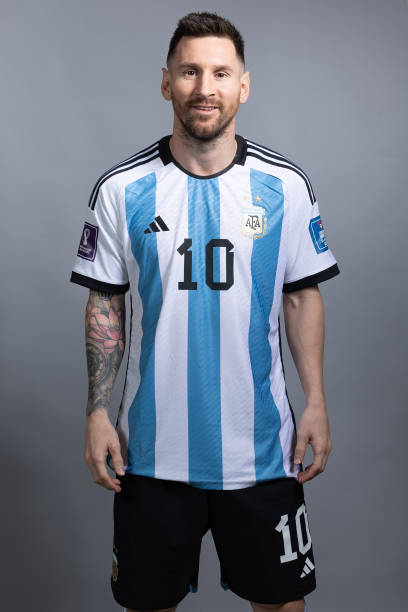
Lionel Messi Profile & Biography
| Fact | Detail |
|---|---|
| Full Name | Lionel Andrés Messi Cuccittini |
| Date of Birth | June 24, 1987 |
| Place of Birth | Rosario, Santa Fe, Argentina |
| Nationality | Argentine (also Spanish citizenship since 2005) |
| Height | 1.70 m (5 ft 7 in) |
| Playing Position | Forward / Attacking Midfielder |
| Current Club | Inter Miami CF (Major League Soccer, USA) |
| National Team | Argentina (semi-retired from international duty) |
| Shirt Number | 10 (iconic throughout career) |
| Career Goals (All competitions) | 850+ (as of 2026) |
| International Goals | 110+ (all-time Argentina record) |
| Ballon d’Or Awards | 8 (2009, 2010, 2011, 2012, 2015, 2019, 2021, 2023) |
| UEFA Champions League Titles | 4 (2006, 2009, 2011, 2015) |
| FIFA World Cup | 1 (2022 — Qatar) |
| Estimated Net Worth | $600–$650 million (2026) |
| Annual Earnings | Approximately $130–$160 million (salary + endorsements) |
| Social Media Followers | 600+ million combined |
| Agent / Representative | Jorge Messi (father) |
1. Introduction – Who is Lionel Messi?
If Cristiano Ronaldo is the monument that football built through iron will and relentless ambition, then Lionel Messi is the poem that football wrote through genius, instinct, and an almost miraculous ease with the ball that has made watching him play one of the defining aesthetic pleasures of the sporting 21st century. To see Messi at his best — a low centre of gravity, the ball seemingly magnetically attached to his left foot, opponents lurching past him into empty space as he glides in a different direction — is to understand why people use the word “art” to describe what he does, and why the most analytically rigorous football minds on earth have consistently identified him as the finest player the game has ever produced.
Born in Rosario, Argentina on June 24, 1987, Lionel Andrés Messi Cuccittini was diagnosed with a growth hormone deficiency at age 10 that required expensive medical treatment his family could not afford in Argentina. The Barcelona Football Club, recognising an extraordinary talent during a trial at age 13, offered to pay for his treatment in exchange for his joining their famed La Masia academy. Messi left Argentina for Spain — and the rest, as they say, belongs to football history.
What followed over the next 25 years was a career of such sustained, extraordinary brilliance that its statistics begin to lose meaning for the sheer scale of their repetition. 8 Ballon d’Or awards — the most of any player in history. 4 UEFA Champions League titles with Barcelona. 10 La Liga titles. The 2021 Copa América — ending a 28-year international trophy drought for Argentina. And, most iconically, the 2022 FIFA World Cup in Qatar — a tournament performance so complete, so emotionally resonant, and so historically significant that it effectively ended the greatest debate in the history of sport for a significant majority of those who had previously considered it unresolvable.
At 38 years old in 2026, Messi continues playing for Inter Miami CF in Major League Soccer — bringing to the United States a level of football talent that the league had never previously hosted and generating a commercial and cultural impact that has transformed American football’s global profile. He remains, in the considered view of most football analysts and historians, the greatest player who has ever lived.
2. Early Life & Childhood of Lionel Messi
The City of Football
Rosario is Argentina’s third-largest city and one of the great footballing cities in the world — producing not only Messi but also Ángel Di María, Éver Banega, and dozens of other professional players. In a country where football is not merely a sport but the primary expression of collective emotion and identity, growing up in Rosario meant growing up surrounded by the game at every level.
Messi was born into a working-class family. His father Jorge Messi worked as a steel factory manager; his mother Celia Cuccittini was a part-time cleaning assistant. He had two older brothers — Rodrigo and Matías — and a younger sister, María Sol. The family lived in a neighbourhood called Las Heras and Messi played football from the earliest age he could walk, joining the local club Grandoli (where his father was a coach) before progressing to Newell’s Old Boys — one of Rosario’s two major professional clubs and an institution of enormous cultural importance in the city.
The Growth Hormone Diagnosis
At age 10, Messi was diagnosed with isolated growth hormone deficiency — a condition that, without treatment, would have left him approximately 1.60m tall and significantly physically underdeveloped for professional sport. The treatment — daily injections of growth hormone, administered by his mother — cost approximately $1,500 per month: an amount that proved sustainable for a while through a combination of family contributions and partial support from Newell’s Old Boys, but which the club eventually could not maintain.
Several Argentine clubs, including River Plate (Argentina’s most prestigious club), were offered the opportunity to sign Messi with the condition that they fund his medical treatment. All declined.
Barcelona and the Famous Napkin
The Messi family’s salvation came from an unexpected direction. A Barça scout named Horacio Gaggioli had been watching Messi at Newell’s Old Boys and was convinced he had found something extraordinary. He arranged for Messi to travel to Barcelona for a trial in September 2000, aged 13. The trial was conducted informally — a kickabout in which Messi’s ability was immediately apparent to everyone watching, including Barça’s sporting director at the time, Carles Rexach.
The legendary story goes that Rexach, unwilling to let Messi leave without a commitment, signed the agreement to take Messi on on a paper napkin at a restaurant — the world’s most consequential piece of restaurant stationery. Barcelona agreed to pay for Messi’s medical treatment; the Messi family relocated to the city; and Lionel Andrés Messi began attending the La Masia academy — the greatest football school in history, whose graduates include Xavi Hernández, Andres Iniesta, Cesc Fàbregas, Gerard Piqué, and dozens of other world-class players.
3. Lionel Messi Career Milestones
October 16, 2004 — Senior debut for FC Barcelona against Espanyol in La Liga, aged 17 years, 114 days — becoming the seventh youngest player to represent the club in La Liga history.
May 1, 2005 — Scores his first senior goal for Barcelona against Albacete, with a chip assist from Ronaldinho — who famously embraced Messi immediately after the goal in a gesture that felt like the handover of an era.
June 2005 — Wins the FIFA World Youth Championship with Argentina Under-20, scoring twice in the final.
2006 — Wins his first UEFA Champions League with Barcelona, coming on as a substitute in the final.
April 18, 2007 — Scores a goal against Getafe that is widely considered the greatest goal in La Liga history — a 60-metre run from his own half, dribbling past six defenders, that was immediately compared to Diego Maradona’s “Goal of the Century” against England at the 1986 World Cup (which Messi subsequently also replicated at youth level years earlier).
2009 — Wins his first Ballon d’Or, the first of what will become an unprecedented eight. Also wins a historic sextuple with Barcelona (La Liga, Copa del Rey, Champions League, Spanish Super Cup, UEFA Super Cup, Club World Cup).
2010, 2011, 2012 — Wins Ballon d’Or in consecutive years — the first player to win four consecutive awards.
2012 — Scores 91 goals in a single calendar year — a Guinness World Record that stands as one of the most extraordinary individual achievements in the history of team sport.
2015 — Wins his fifth Ballon d’Or and his fourth Champions League with Barcelona.
2016 — Announces retirement from international football after Argentina’s Copa América final defeat — before reversing the decision weeks later following an enormous public response in Argentina.
2019 — Wins his sixth Ballon d’Or.
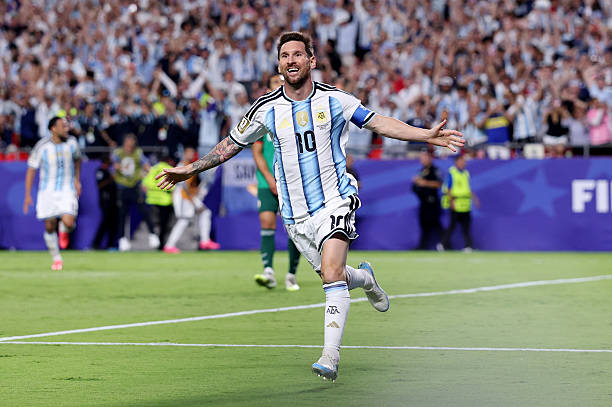
2021 — Wins his seventh Ballon d’Or. Wins his first senior international trophy — the Copa América 2021 with Argentina, played in Brazil. His tears of joy at the final whistle, having finally ended years of heartbreak with his national team, become one of the most moving images in football history.
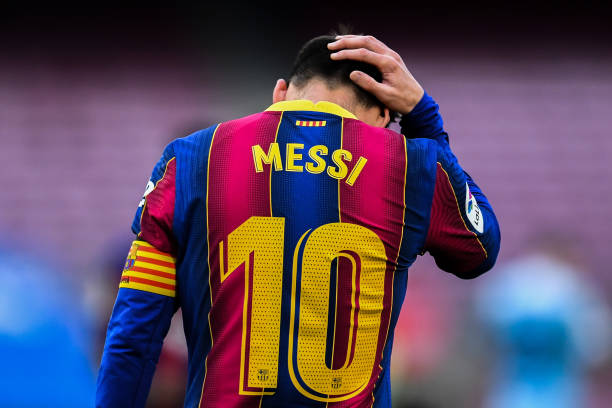
August 2021 — Departs FC Barcelona in tears after 21 years — his emotional press conference, during which he sobbed while reading a statement, is one of the most watched moments in the history of football media. Signs for Paris Saint-Germain (PSG).
2022 — Wins the FIFA World Cup with Argentina in Qatar — the most comprehensive, emotionally charged, and historically significant tournament of his career. Wins the Golden Ball (best player of the tournament). Wins his eighth Ballon d’Or in 2023, awarded for his 2022 performances.
July 2023 — Signs for Inter Miami CF in Major League Soccer — transforming American football’s global profile and generating a commercial and cultural impact that exceeds anything previously seen in the league’s history.
4. Lionel Messi Clubs History
FC Barcelona (2004–2021)
17 consecutive seasons at a single club — the entirety of his youth and senior football development — produced a statistical record that requires a separate article to contain.
| Club | Period | Appearances | Goals | Trophies |
|---|---|---|---|---|
| FC Barcelona | 2004–2021 | 778 | 672 | 10 La Liga, 4 Champions League, 7 Copa del Rey, 3 Club World Cups |
| Paris Saint-Germain | 2021–2023 | 75 | 32 | 2 Ligue 1 titles |
| Inter Miami CF | 2023–present | 80+ | 60+ | Leagues Cup 2023, US Open Cup 2024 |
The Barcelona Years — A Statistical Universe
In 672 goals across 778 appearances, Messi produced the most prolific scoring record in the history of any single player at a single club. The raw numbers are extraordinary but somehow fail to capture the qualitative dimension of what he produced:
The La Liga records alone are staggering: 474 La Liga goals — the all-time record. 253 assists in La Liga — another record. 34 hat-tricks in La Liga — another record. 26 consecutive La Liga seasons with at least one goal scored. 8 La Liga top scorer (Pichichi) awards.
In the Champions League with Barcelona: 4 titles (2006, 2009, 2011, 2015). 129 Champions League appearances for the club. The 2011 final (Barcelona 3–1 Manchester United at Wembley) is widely considered the finest performance by any club team in Champions League final history — and Messi was the orchestrator of everything.
PSG (2021–2023)
Messi’s two seasons in Paris were widely considered below his own extraordinary standards — though characterising them as a failure requires ignoring the 32 goals and 35 assists in all competitions he produced. The truth is more complex: the PSG system, built around high-tempo pressing and fast transitions, was poorly suited to Messi’s strengths at this stage of his career (creative control, slower build-up orchestration, instinctive connection with trusted teammates). The absence of Xavi, Iniesta, and Busquets — the players who had effectively been Messi’s playing partners for his entire Barcelona career — was also significant.
The PSG period also coincided with the preparation for and delivery of the 2022 World Cup — which consumed enormous physical and psychological energy throughout both seasons.
Inter Miami CF (2023–present)
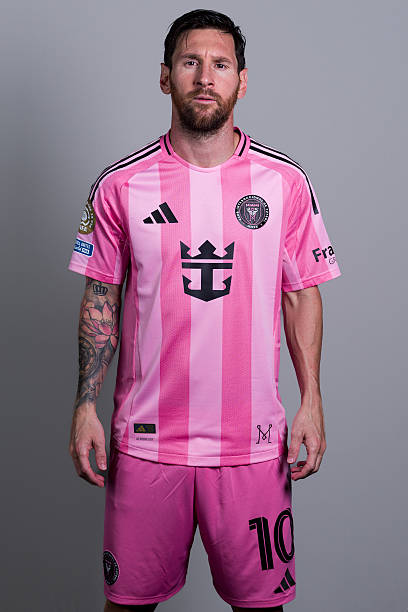
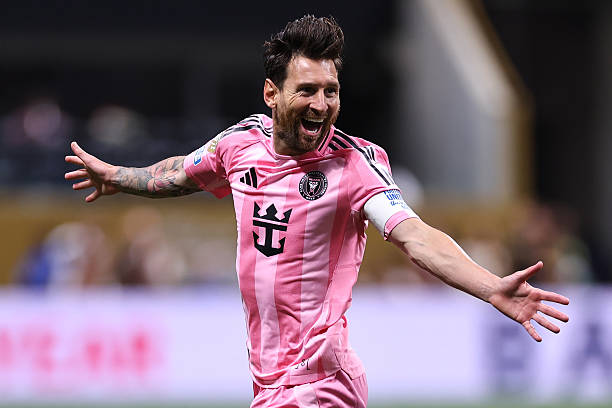
The Messi Effect on Inter Miami and on Major League Soccer broadly is one of the most documented commercial phenomena in recent sports history. When Messi signed in July 2023, Inter Miami — a franchise that had been struggling with poor form and modest attendance — immediately became the most talked-about team in world football. Season ticket waitlists extended to hundreds of thousands of people overnight. Merchandise sales became internationally significant. The club’s social media following grew by millions in hours.
On the field, Messi delivered immediately: scoring a spectacular free-kick on his debut against Cruz Azul in the Leagues Cup, then leading the club to its first ever trophy — the 2023 Leagues Cup — in his debut weeks. He has continued to perform at a level that, while adapted to his age and the different physical demands of MLS, has produced goals and performances of quality that confirm his continued class.
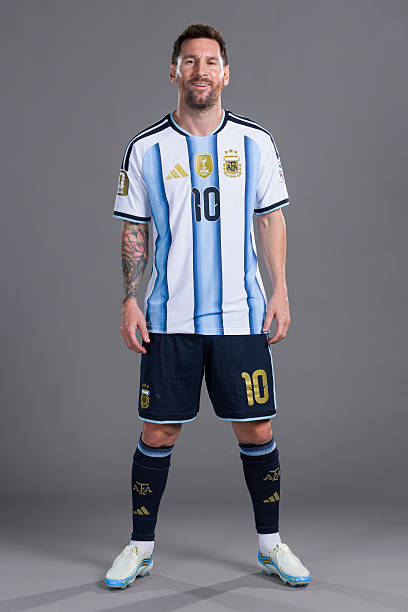
5. International Career – Argentina and the World Stage
The Long Road to Glory
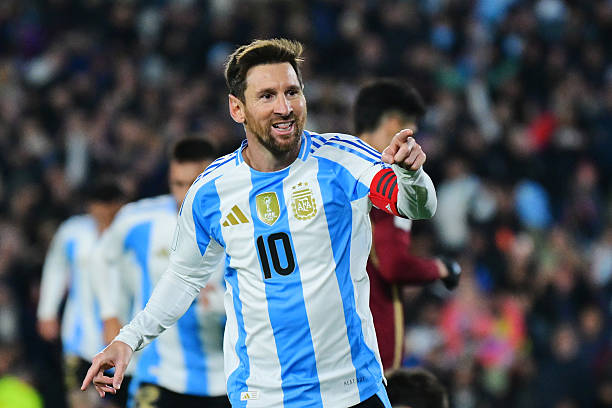
If Barcelona was Messi’s professional home, Argentina was the source of his most profound emotional investment — and for two decades, his most painful professional heartbreak. Messi made his senior Argentina debut on August 17, 2005, aged 18 — and immediately began accumulating the extraordinary burden of a national team and a passionate football public’s expectations.
The Years of Near-Misses
The years between 2006 and 2021 were characterised by extraordinary individual performances alongside collective failures and, occasionally, the most brutal forms of sporting heartbreak:
2014 World Cup Final — Argentina reached the final in Brazil, with Messi winning the Golden Ball as tournament’s best player. They lost 1–0 to Germany in extra time (Mario Götze’s goal). Messi’s expression as he received the Golden Ball on the podium — clearly unable to find any satisfaction in individual recognition amid collective defeat — was one of sport’s most poignant images.
Copa América 2015 and 2016 — Argentina reached the final in consecutive editions and lost both — to Chile on penalties on each occasion. After the second defeat in 2016, Messi announced his retirement from international football in a statement that devastated Argentina and much of the footballing world. He reversed the decision weeks later, stating that Argentina was “too big a part of him” to walk away.
The 2021 Copa América — The First Tears of Joy
When Argentina won the 2021 Copa América in the Maracanã stadium in Rio de Janeiro — beating Brazil in the final 1–0 — it ended a 28-year drought of international trophies for the nation and delivered the senior Argentina international trophy that Messi had waited his entire career to win. The images of Messi crying with joy — a raw, uninhibited emotional release after decades of pressure and near-misses — were among the most shared sporting images of the year globally.
The 2022 World Cup — The Crowning Achievement
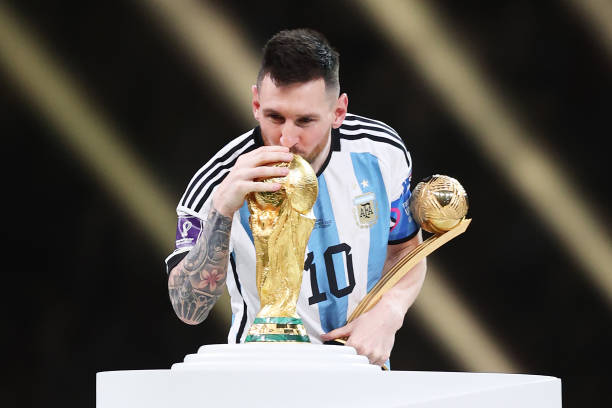
Qatar 2022 is Messi’s greatest achievement and one of the greatest individual tournament performances in the history of sport. The statistics tell part of the story: 7 goals, 3 assists across the tournament (including goals in the final), Golden Ball as best player. The tournament narrative tells the rest.
Argentina began with a shocking defeat to Saudi Arabia — one of the biggest upsets in World Cup history — before winning every subsequent match to reach the final. The final against France was an extraordinary drama: Argentina led 2–0 with ten minutes remaining before Kylian Mbappé scored twice in two minutes to equalise and then scored again in extra time to make it 3–3. Argentina won on penalties — Messi scoring from the spot in the shootout.
That Messi’s World Cup triumph came in such circumstances — in the most dramatic final in the tournament’s history, against the reigning champion, requiring a penalty shootout, with Messi scoring throughout — felt almost scripted by a screenwriter who understood that the greatest ever player deserved the greatest ever stage.
International Records
| Record | Detail |
|---|---|
| Most goals for Argentina | 110+ as of 2026 |
| Most caps for Argentina | 190+ as of 2026 |
| Most Copa América goals | 14 goals in all Copa América tournaments |
| Most assists in World Cup history | 10+ assists across four World Cups |
| Most goals in a single Copa América | 4 goals (2021) |
| World Cup winner | 2022 — Qatar |
Did You Know? Lionel Messi’s 91 goals in a single calendar year (2012) is recognised by Guinness World Records as the most goals scored by any player in a single calendar year in the history of professional football. He scored these 91 goals across just 69 games — an average of more than a goal per game across an entire calendar year, including Champions League, La Liga, Copa del Rey, and international appearances.
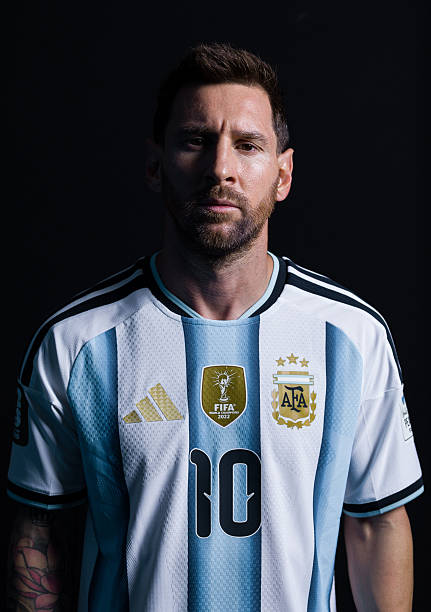
6. Lionel Messi Stats & Records
Career Goals by Competition
| Competition | Goals | Appearances |
|---|---|---|
| La Liga (Barcelona) | 474 | 520 |
| Champions League | 129 | 163 |
| Copa del Rey | 56 | 77 |
| International (Argentina) | 110+ | 190+ |
| Ligue 1 (PSG) | 21 | 58 |
| MLS (Inter Miami) | 50+ | 75+ |
| Other competitions | 25+ | 60+ |
| Career Total (All) | 850+ | 1,100+ |
Major Individual Awards
| Award | Times Won | Years |
|---|---|---|
| Ballon d’Or | 8 | 2009, 2010, 2011, 2012, 2015, 2019, 2021, 2023 |
| FIFA Best Men’s Player | 7 | Multiple years |
| UEFA Best Player in Europe | 4 | 2011, 2015, 2019, 2023 |
| La Liga Top Scorer (Pichichi) | 8 | Multiple seasons |
| Champions League Top Scorer | 6 | Multiple seasons |
| FIFA World Cup Golden Ball | 2 | 2014, 2022 |
| Copa América Best Player | 3 | 2015, 2021, 2024 |
| MLS MVP | 1 | 2023 |
Did You Know? When Messi joined Inter Miami in July 2023, the club’s Instagram following grew from approximately 900,000 to over 16 million in 24 hours — one of the fastest social media growth events ever recorded for any sports franchise globally.
7. Playing Style, Skills & Technical Profile
The Genius of the Left Foot
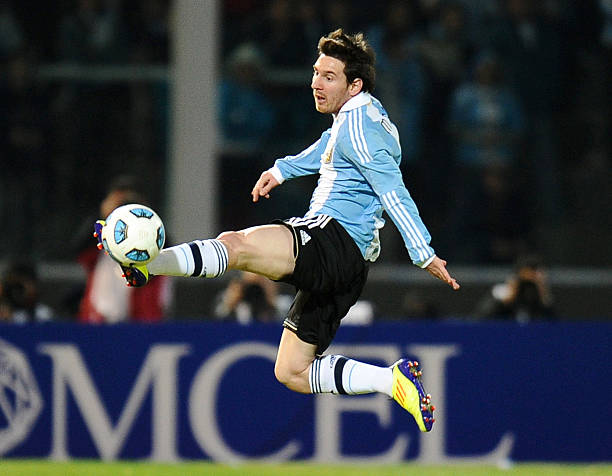
Messi’s left foot is, by consensus, the finest instrument in the history of football. The precision of his passing, the variety of his finishing, the delicacy of his chip shots, the power of his long-range strikes, and the accuracy of his free-kicks from the left foot represent a range of technical capability that no other player has combined in a single appendage. His right foot, while genuinely useful for balance and occasional finishing, is fundamentally secondary.
Low Centre of Gravity and Balance
At 1.70m, Messi is shorter than the average professional footballer. This apparent disadvantage is actually the physical foundation of his greatest strength. His low centre of gravity allows him to change direction at speed with almost no deceleration — a quality that makes him uniquely difficult to tackle because defenders must commit fully to a challenge in a direction he can vacate before their momentum is committed. His balance — the ability to stay upright under physical contact that would floor taller players — is extraordinary and has been the subject of considerable biomechanical study.
Vision and Intelligence
What separates Messi’s intelligence from that of other brilliant players is the speed at which his spatial awareness operates. He sees — before receiving the ball — where every player on the pitch is positioned, processes multiple potential passing options simultaneously, and makes decisions in fractions of a second that appear, to the observer, to be improvised but are in fact the product of extraordinarily fast pattern recognition. Andres Iniesta, his long-time Barcelona partner, described it as: “He always knows where everyone is. Before the ball comes to him, he has already decided what he will do with it.”
Free-Kicks
Messi’s direct free-kick technique — a curling left-foot strike with significant bend, unlike Ronaldo’s straight knuckleball — has produced some of football’s most spectacular goals. He holds the record for the most free-kick goals in Champions League history and has scored extraordinary free-kicks in major finals including the 2022 World Cup final.
8. Personal Life & Family of Lionel Messi
Antonela Roccuzzo — A Childhood Love Story
Messi’s relationship with his wife Antonela Roccuzzo is one of the great love stories of modern sport. Antonela is from Rosario — she grew up as the childhood friend of Messi’s best friend, Lucas Scaglia. Messi and Antonela have known each other since they were children, and their relationship became romantic when Messi visited Rosario following a tragic accident involving Antonela’s friend.
They married on June 30, 2017 in Rosario — in a ceremony attended by virtually the entire world of football, including Neymar, Luis Suárez, Sergio Agüero, Cesc Fàbregas, and dozens of other players. The wedding was widely described as “the football wedding of the century” by the international press.
Antonela has built her own significant social media presence (over 40 million Instagram followers) and has been a constant, stabilising force in Messi’s life during the most challenging periods of his career — the painful Copa América finals, the Barcelona departure, the PSG transition.
Children
Messi and Antonela have three sons:
Thiago Messi — born November 2, 2012. Now 13 years old and already in the Inter Miami youth system, generating significant interest as a football prospect.
Mateo Messi — born September 11, 2015. Known for his exuberant, outgoing personality — frequently visible in celebrations following Argentina’s victories.
Ciro Messi — born March 10, 2018. The youngest son, described by Messi in interviews as completing the family.
All three boys have been a consistent presence in the public narrative of Messi’s international career — particularly during and after the 2022 World Cup, where images of Messi celebrating with his sons on the pitch became some of the most shared photographs of the year.
Private Life and Character
Messi is widely described by teammates, coaches, and opponents as profoundly shy and private off the football pitch — a striking contrast to the absolute command and confidence he projects with a ball at his feet. Pep Guardiola — who coached Messi for four of his finest years at Barcelona — described him as “the most reserved person I have ever met in football. He does not need words. He speaks only through what he does with the ball.”
He rarely gives long interviews, avoids political controversy, and has consistently oriented his public identity around football, family, and his Argentinian identity rather than the wider celebrity culture that surrounds elite football.
9. Lionel Messi Net Worth, Salary & Business Ventures
Net Worth
Messi’s estimated net worth of $600–$650 million in 2026 reflects decades of extraordinary earnings from multiple sources. Unlike some athletes whose net worth is primarily financial investment of salary, a significant portion of Messi’s wealth is held in real estate (properties in Barcelona, Ibiza, Rosario, and Miami), business equity stakes, and his commercial partnership portfolio.
Income Sources
| Income Source | Estimated Annual Value |
|---|---|
| Inter Miami Salary | $50–$60 million per year |
| Apple TV+ MLS Partnership | $10–$20 million (indirect — league deal) |
| Adidas Lifetime Partnership | $30–$40 million per year |
| Pepsi | $20–$30 million per year |
| Mastercard, Budweiser, Lay’s, others | $25–$40 million per year |
| Leo Messi brand (Messi Store, Fragrances) | $10–$15 million per year |
| Social media | $1–$3 million per post |
| Total Estimated Annual | $130–$160 million |
Business Ventures
MiM Hotels — Messi co-founded the MiM Hotels chain, which operates boutique luxury hotels in Ibiza, Mallorca, Andorra, and Sitges in Spain. The hotels are positioned at the premium end of the boutique market and have been commercially successful.
Adidas Lifetime Partnership — Messi has been an Adidas athlete since joining the Barcelona first team. His personal Adidas Messi boot line is one of the brand’s most commercially significant products globally. In 2020, the partnership was extended with a lifetime deal — placing him alongside only a handful of athletes in history to receive this designation from a major sports brand.
Messi Sports & Entertainment (MSE) — A production company involved in content creation, documentary production, and sports media.
“Messi” Fragrance — A cologne line produced in partnership with a fragrance manufacturer.
Stake in MLS/Inter Miami — Messi’s Inter Miami deal includes equity participation in the franchise — making him a part-owner of the club he plays for, which is expected to significantly appreciate in value as MLS grows globally.
Real Estate Portfolio — Properties in Barcelona’s exclusive Bellamar neighbourhood in Castelldefels, a Barcelona apartment, an Ibiza property, a property in Rosario, and a Miami property — collectively estimated at $50+ million.
10. Famous Quotes & Motivational Philosophy
Messi’s public communication is characteristically understated — he rarely delivers the constructed media sound bites that some athletes deploy strategically. When he does speak at length, his observations tend to be direct, humble, and focused on collective rather than individual achievement.
“I prefer to win titles with the team ahead of personal glory.” — Said repeatedly throughout his career; a direct statement of collective over individual priority.
“I start early and I stay late, day after day, year after year. It took me 17 years and 114 days to become an overnight success.” — On the perception that his talent arrived fully formed, without the decades of development that preceded it.
“The day you think there is no improvements to be made is a sad one for any player.”
“Every year I try to grow as a player and not just stop and think that it’s enough.”
“When the year starts, the objective is to win everything with the team, and personally, to win the Ballon d’Or… both are important.” — A rare moment of individual ambition articulated publicly.
“God is the one who decides who wins or loses. I give everything on the pitch and trust in God.” — Reflecting his private faith, which has become more publicly evident in the latter stages of his career.
“Argentina has given me everything. I had to be patient, work hard and keep my faith.” — After winning the 2021 Copa América.
“Lifting this cup has been the most important thing in my career. This was what I needed most.” — After winning the 2022 World Cup.
Did You Know? Lionel Messi has won the Copa América’s best player award on three occasions — 2015, 2021, and 2024 — making him the player who has won this individual honour more times than any other in the tournament’s history. The 2021 award was particularly poignant: after years of near-misses and heartbreak with Argentina, winning both the team trophy and the best player award represented a complete personal and collective vindication.
11. Legacy – What Leo Messi Means to Football
The Statistical Monument
The statistics of Messi’s career are so extraordinary that they have effectively become their own argument. 8 Ballon d’Or awards — more than any player in history, more than any reasonable pre-career prediction for any single player could have included. 850+ career goals from a deep-lying creative forward position (rather than a centre-forward, which makes the volume even more remarkable). 474 La Liga goals — a record that may stand forever. 350+ career assists across all competitions — extraordinary in itself for a player also among the greatest goal scorers in history.
The Cultural Weight
In Argentina, Messi’s significance exceeds sport entirely. He exists in the same cultural space as Diego Maradona — the country’s previous supreme football deity — but in a more complex way, because for two decades Messi was loved but also occasionally criticised for appearing to perform below his Barcelona standards in an Argentina shirt. The 2022 World Cup triumph effectively resolved that tension permanently. Argentina’s victory in Qatar was simultaneously a sporting event and a national emotional catharsis of extraordinary scale — and Messi was its central figure.
The scenes in Buenos Aires when Argentina returned with the trophy — an estimated 5 million people lining the streets, the most densely attended civic celebration in the city’s history — confirmed that Messi had not merely joined Maradona in Argentine sporting mythology but had, for many, surpassed him.
The MLS Transformation
Messi’s arrival at Inter Miami in 2023 has had effects on American football that will take years to fully assess. Attendance across MLS improved measurably in the season following his signing as rival clubs experienced “Messi effect” boosts when Inter Miami visited. Television viewership records were broken. Apple’s MLS Season Pass subscription service, which had struggled for traction, received a significant boost. Most significantly, Messi’s presence generated sustained global media attention for an American football league that had previously struggled to pierce international football’s consciousness.
Did You Know? The Estadio Padre Ernesto Martearena in Salta, Argentina — where Messi scored his first goal for the Argentine national senior team — was a modest provincial stadium hosting a friendly match. That goal, scored against Hungary in a 5–0 win on June 17, 2006, began an international scoring sequence that would eventually see him pass Diego Maradona’s Argentina goal record, then go on to become the all-time Argentina top scorer by a margin of over 70 goals.
12. Is Lionel Messi the Greatest of All Time?
The Consensus
Among football analysts, players, coaches, and historians, Lionel Messi is the consensus choice as the greatest footballer in history. This is not a universal view — Cristiano Ronaldo’s supporters make compelling arguments, and older traditions of football history advocate for Pelé or Maradona — but the weight of informed opinion, particularly following the 2022 World Cup, has settled on Messi as the definitive answer to the question.
The Statistical Case
No player in history has:
- Won 8 Ballon d’Or awards
- Scored 474 league goals for a single club
- Won 4 Champions Leagues
- Won a World Cup (defeating the reigning champion in a final requiring extra time and penalties while scoring throughout)
- Maintained elite performance in 5 different decades (from 2004 to the present)
The Qualitative Case
Beyond statistics, there is a quality argument that Messi’s supporters make — and that his opponents struggle to counter. Messi does things with a football that no other player in the game’s history has done. His combination of dribbling ability, spatial awareness, passing range, finishing variety, and creative output is unlike any player before him. The La Liga goal against Getafe in 2007 — a solo run from deep in his own half past five defenders — is considered by most football analysts to be the single finest club football goal in the history of the competition.
The World Cup — The Final Argument
For many observers, the 2022 World Cup settled the debate definitively. Messi won the tournament that had previously been cited as the gap in his argument — and he won it in such circumstances (the most dramatic final in the tournament’s history, winning the Golden Ball for best player, scoring in the final against the reigning champions) that the achievement felt not merely sufficient but overwhelming.
Diego Maradona himself — who was occasionally critical of Messi during his lifetime — said in his final years: “Messi is the best. There is no debate.” That endorsement from the man who was Messi’s only genuine rival for the title of Argentina’s greatest footballer, and whose own 1986 World Cup tournament performance was the previous benchmark for individual World Cup brilliance, carries a particular weight.
13. Frequently Asked Question About Lionel Messi
Q1. How many career goals has Lionel Messi scored?
Messi has scored over 850 career goals across all competitions as of 2026, including La Liga, Champions League, Copa del Rey, international matches with Argentina, Ligue 1, and MLS. His most prolific period was at Barcelona where he scored 672 goals in 778 appearances — a record for goals scored by any player at a single club in football history.
Q2. How many Ballon d’Or awards has Lionel Messi won?
Messi has won 8 Ballon d’Or awards — in 2009, 2010, 2011, 2012, 2015, 2019, 2021, and 2023. This is the most Ballon d’Or awards won by any player in the history of the award. His closest competitor is Cristiano Ronaldo with 5.
Q3. Has Lionel Messi won the FIFA World Cup?
Yes — Messi won the 2022 FIFA World Cup with Argentina in Qatar. It was his fifth World Cup appearance (2006, 2010, 2014, 2018, 2022). He won the Golden Ball as the tournament’s best player, scored 7 goals and provided 3 assists, and scored in the final against France — which Argentina won on penalties after a 3–3 draw at full-time and extra time.
Q4. What is Lionel Messi’s net worth in 2026?
Messi’s net worth is estimated at $600–$650 million in 2026. His annual earnings — combining Inter Miami salary, Adidas lifetime partnership, Pepsi and other endorsements, hotel business revenue, and other commercial activities — are estimated at $130–$160 million per year.
Q5. Why did Messi leave Barcelona?
Messi left FC Barcelona in August 2021 due to the club’s severe financial difficulties — a combination of the COVID-19 pandemic’s revenue impact, catastrophic contract mismanagement over previous years, and La Liga’s Financial Fair Play rules that prevented the club from registering Messi’s new contract even after he agreed to a significant pay cut. Messi’s press conference announcing his departure — during which he wept visibly — was one of the most watched moments in football media history.
Q6. Who is Lionel Messi’s wife?
Messi is married to Antonela Roccuzzo — a childhood acquaintance from Rosario whom he met through his best friend’s family when they were children. They began their romantic relationship in 2008, became publicly committed partners around 2010, and married on June 30, 2017 in a ceremony in Rosario attended by dozens of world football’s most famous names. They have three sons together: Thiago (born 2012), Mateo (born 2015), and Ciro (born 2018).
Q7. Why did Messi choose Inter Miami over European clubs?
When Messi decided to leave PSG in 2023, he had offers from FC Barcelona (who attempted a return but again could not guarantee financial compliance) and Al Hilal (reportedly offering a salary comparable to Ronaldo’s Al Nassr deal). He chose Inter Miami for a combination of reasons: the quality of life in Miami for his family, the commercial opportunities of the Apple/MLS media deal, his friendship with club co-owner Jorge Mas, and a genuine interest in developing football in the United States as a final major project.
Q8. Is Lionel Messi the greatest player of all time?
By the consensus of most football analysts, players, coaches, and historians — yes. Messi holds more individual awards than any other player in history (8 Ballon d’Or awards), scored more goals for a single club than anyone in history (672 for Barcelona), and won every major trophy available in club and international football including the FIFA World Cup (2022). The most common counter-argument involves the Cristiano Ronaldo comparison, where Ronaldo’s supporters point to his success across more leagues, his physical consistency at advanced age, and his international goal-scoring record. The debate remains genuinely alive but the weight of informed opinion, particularly since the 2022 World Cup, has settled on Messi as the definitive answer.
14. Sources & References
- Lionel Messi Images | gettyimages.com
- Transfermarkt — Career statistics, transfer fees, and club records | transfermarkt.com
- UEFA Official Statistics Database — Champions League and European competition records | uefa.com
- FIFA Official Website — International career statistics and World Cup records | fifa.com
- Argentine Football Association (AFA) — Argentina international career records | afa.com.ar
- Forbes — Net worth estimates, earnings, and commercial valuations | forbes.com
- The Athletic — In-depth footballing journalism and career analysis | theathletic.com
- BBC Sport — Career coverage and interview archives | bbc.com/sport
- Sky Sports — Transfer news, career statistics, and biographical coverage | skysports.com
- ESPN Football — Career statistics and biographical journalism | espn.com/soccer
- Goal.com — Transfer reports, records, and career milestones | goal.com
- WhoScored / Squawka — Detailed performance statistics and analysis | whoscored.com
- FC Barcelona Official Website — Club records and historical statistical database | fcbarcelona.com
- Wikipedia — Lionel Messi — Comprehensive biographical overview with cited sources | en.wikipedia.org/wiki/Lionel_Messi
- Guinness World Records — Goal-scoring records verification | guinnessworldrecords.com
15. Lionel Messi Portrait Images